
Restore Balance & Live Well
A personalised, evidence-informed approach to understanding the root causes of imbalance and supporting lasting health and vitality.
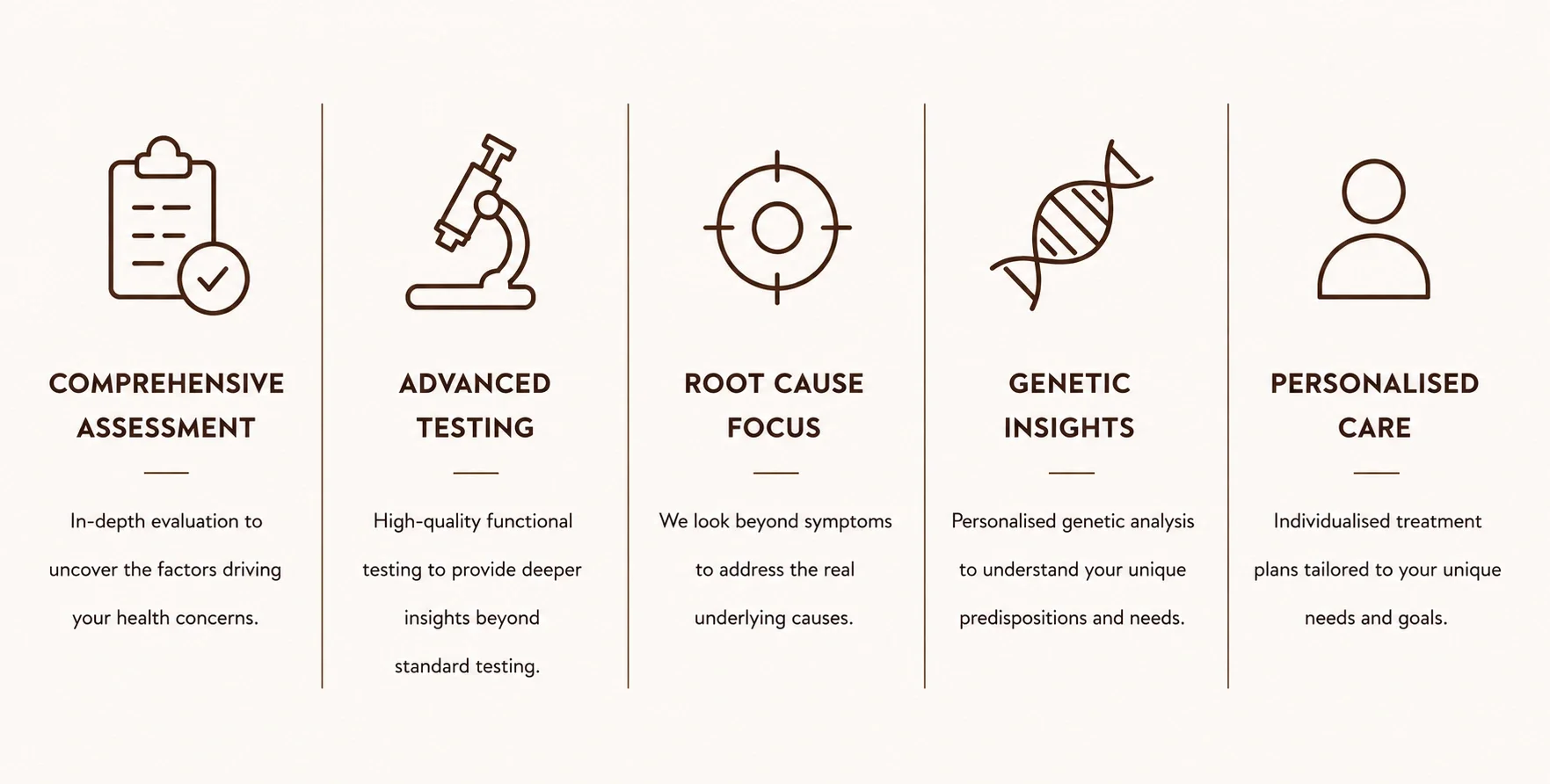
Looking Beyond the Symptoms. Bringing Clarity to Complex Health Patterns
Your health and well-being are shaped by the interaction of many factors — and understanding those connections is where meaningful progress begins.
Through a personalised, evidence-informed assessment, we look beyond isolated symptoms to identify the clinical, physiological and lifestyle factors most relevant to your health.
This provides a clearer direction for care and a more targeted strategy to help you feel and function better over the long term.
Targeting the hidden patterns or triggers
Persistent symptoms rarely have a single cause. They often result from multiple overlapping factors that must be considered within the broader clinical context, such as:
Changes in the gut microbiome and gastrointestinal barrier function
Altered gut–brain function and autonomic nervous system regulation
Changes in bowel motility and bowel movement patterns
Inflammatory or immune-related activity
Food-related triggers, sensitivities, or intolerances
Viral, parasitic, bacterial, fungal, or mould-related exposures
Overlapping gastrointestinal conditions, such as irritable bowel syndrome or inflammatory bowel disease
The goal is to move beyond managing symptoms alone by identifying the factors most relevant to your health and developing a targeted, individualised strategy focused on better function, greater resilience, and lasting well-being.
Dr. Alain Frabotta works with individuals seeking to improve their health, vitality, and overall sense of well-being.
His approach brings together clinical assessment with functional and integrative medicine to understand how digestion, the gut microbiome, nutrition, stress, sleep, inflammation, and the gut–brain connection may influence how a person feels and functions.
Rather than focusing on symptoms in isolation, the emphasis is on supporting the body as an interconnected system and developing a personalised pathway toward improved resilience and more sustainable long-term wellbeing.
Personalised Health Planning - From Genetic Insight to Practical Action
Our approach provides a more detailed understanding of how your genetic variations may influence core biological pathways. This includes genetic insights into your:
Detoxification and methylation pathways
Inflammation
Hormone metabolism
Neurotransmitter balance
Mitochondrial function and nutrient requirements.
What it looks like
1. We Start by Listening
Your initial consultation is designed to understand the full picture.
We take the time to explore your health history, current concerns, previous investigations, treatment responses, diet, lifestyle, stress, environment, and other factors that may be influencing your health and well-being.
2. Clinical Assessments and Targeted Investigations
Clinical assessment and targeted investigations are utilised to help understand and clarify the underlying drivers of your ongoing symptoms and provide a more informed basis for personalised care planning.
3. Individualised Treatment Planning
A structured treatment plan is developed based on the assessment findings, clinical priorities, and your individual needs, with clearly defined steps to guide care, monitor outcomes, and support measurable progress.
4. Ongoing Monitoring and Review
Your progress is regularly reviewed to assess your improvements, including treatment effectiveness, symptom changes, tolerance, and evolving needs, to ensure your care remains responsive and focused on meaningful, sustained progress.